

The Underground Trees: How the Coeur d’Alene Mountains Were Reforested
By Mike Blackbird
Approaching from the west on Interstate 90 at the outskirts of my northern Idaho hometown, a billboard proclaims:
You are now near KELLOGG
The Town which was Discovered
By a JACKASS—
And which is inhabited
By its Descendants.
Local legend claims that an old prospector, Noah Kellogg, was camped up Milo Creek in 1885. He awoke one morning to find that his jackass had slipped its hobble during the night and climbed up the mountainside. Kellogg spent all morning trying to catch his jackass, only to watch it scramble out of his reach each time he approached it. Finally, out of frustration, the old prospector threw a rock, hitting the jackass in the flank. Startled, it kicked out its hind legs, knocking the cap off an outcropping to expose a vein of lead and silver, which would prove to be seventy feet wide and half a mile long [for a slightly different version of this tale, see “Kellogg—Spotlight City,” by Erin Stuber, IDAHO magazine, May 2004].
Most likely, the story is apocryphal, but Noah Kellogg did discover the biggest lead and silver mine in the world. It wasn’t long before other rich mines were discovered in the mountains around the Silver Valley. Between 1885 and 1979, the mines produced 907 million ounces of silver—almost five times that produced by the legendary Comstock Lode in Nevada.
Unfortunately, extracting the mineral wealth from the Coeur d’Alene Mountains came at a significant environmental cost. The South Fork of the Coeur d’Alene River, flowing the length of the Silver Valley, ran gray with mine tailings. In my youth, the river was always called the “lead creek” or “crick” in local parlance. Fish didn’t live in such heavily polluted water. Ducks and swans didn’t, either, if they lingered too long during migration. It wasn’t unusual to find dead and dying ducks poisoned by arsenic and cadmium contaminated plants. Saddest of all was to find the remains of tundra swans poisoned by the lead-filled roots of water plants. The little patch of the world I grew up in was not bird friendly.
Over the decades, the mountains encircling Kellogg were steadily denuded of trees. Eventually, more than a billion board feet of timber were used to shore up the tunnels and shafts of the SilverValley’s mines. Local lore held that in the Coeur d’Alene Mountains there was more timber underground than above ground. Forest fires in 1910 and 1931 burned what the mines hadn’t claimed.
When the lead smelter opened in 1918, spewing sulfur dioxide-laden smoke into the atmosphere, the community found itself at a crossroads. It had to choose between the threat of eventual harm to the health of its citizens and the immediate harm of job loss and economic security. No one needed to look farther than the treeless mountains, a consequence of sulfur dioxide-laden smoke preventing natural reforestation and compromising environmental health, to ascertain the choice the community made. The only green on the mountains above Kellogg were service berry and, ironically, syringa, Idaho’s state flower.
Vardis Fisher described my hometown in a 1930s guidebook: “Below it the river bottoms look like a caricature of a graveyard, and above it the denuded mountains declare the potency of lead. West of Kellogg with its miracles of machinery, there is still to be seen a poisoned and dead or dying landscape.” I suspect there was little doubt in the minds of drivers passing Kellogg on I-90 that descendants of a jackass surely lived there. However, the opinion of travelers was of little concern to valley residents, because as long as the river ran gray, men had silver in their pockets.
This was the world I left after graduating from high school to join the navy in the summer of 1960. In 1982, when Gulf Resources closed the Bunker Hill Mine and smelter, more than two thousand people lost their jobs. Businesses that had been open for fifty years closed their doors. Many of the mining industry’s most experienced miners soon took jobs in mines in Montana, New Mexico, and Nevada. The population of the SilverValley went into decline. In the meantime, the EPA designated the twenty-one acres surrounding the smelter as a Superfund Cleanup Site. But Kellogg, destined to be the second largest Superfund site in the nation, refused to die and fade away as had many mining towns in the West. Instead it began reinventing itself in an environmentally agreeable manner, helping Kellogg to avoid being just another Love Canal, and lifting its battered pride to belie its image as an object of ridicule.
Today, mine tailings haven’t been dumped in the river for more than forty years. Fish populate all reaches of the river. When I took a boat trip up the Coeur d’Alene River a few summers ago, it seemed there was an osprey nest every quarter mile. To me, seeing ospreys nesting along the river was emblematic that a dead or dying environment could be resurrected. An important element of Kellogg’s renewal came about in a singular way.
When I was growing up in the Silver Valley, it was well-known that deep underground in a hoist room of the Bunker Hill Mine grew a potted orange tree. The hoist room remained lit twenty-four hours a day by incandescent lights. With a constant temperature of seventy-five degrees and ideal humidity, all that was required was a occasional fertilizer and water. While growing an orange tree thousands of feet under the Coeur d’Alene Mountains might be interesting, the purpose of the mine was the extraction of silver, lead, and zinc. The company had no interest in the nursery business. That is, until 1972, when Ed Pommerening arrived on the scene.
As forestry student at the University of Idaho, Ed proposed replanting the treeless mountains around the Silver Valley. Considering that the cost of growing a conifer seedling would be around eighty cents each, and adding another $60,000 to build a greenhouse, the total cost of the project was estimated at close to $500,000. Even if Ed were able to find the money to launch his project, the Forest Service contended that because of the contaminated soil on the mountains, he would be lucky if he got a ten percent survival rate. Ed proposed using a ventilation tunnel in the upper level of the Bunker Hill Mine, where the temperature remains a constant seventy-five degrees year-round, with ideal humidity and a constant flow of air. All that would be needed were grow lights for white pine, Western larch, ponderosa pine, and Douglas fir seedlings.
After graduating in 1974, Ed was hired by Bunker Hill to create his underground nursery, utilizing grow lights specially manufactured for the low height of the mine’s “back” or ceiling. The cost of growing a seedling underground fell from eighty cents to two cents. A project to replant the mountains that would have cost almost $400,000 a year above ground would only cost $10,000 underground. Despite a project that was economically feasible, Ed was still confronted with the Forest Service’s contention that only ten percent of his seedlings would survive the poisoned mountain soil, since the survival of their own replantings on logged-over mountainous soils was just fifty percent.
But when Ed was still in school and was working one night per week in the School of Forestry’s plant lab at the University of Idaho, he had accidentally put too much phosphorous in the SilverValley soil of his experimental seedlings. It turned out to be a fortuitous overdose, because he discovered that phosphorous bound to the metals in the soil. Only his containerized seedlings survived. Indeed, they flourished. Rather than a ten percent survival rate, he attained a ninety-eight percent survival rate.
For the next twenty years, Ed hired local high school kids every spring to plant five million conifer seedlings on the mountainsides around Kellogg. It seemed like poetic justice that the Bunker Hill Mine, responsible for stripping the forested mountainsides around Kellogg to provide timber for the mine, had become the incubator for five million seedlings, assuring the reforestation of those same mountainsides.
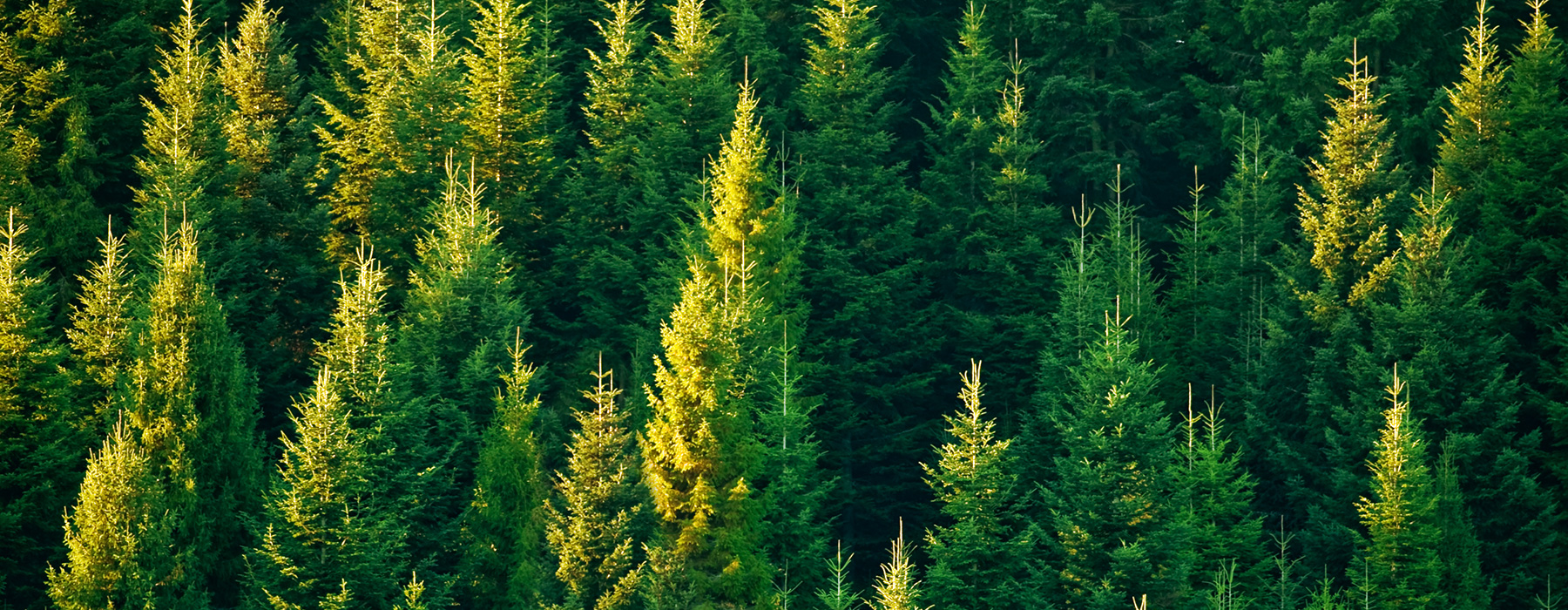
The first week in August 2010, I attended my fiftieth high school class reunion. To know what my hometown was when I left in 1960 and to see what it has become today was an awe-inspiring experience. My old classmates and I— many now grandparents and even great-grandparents, some of whom I last saw on graduation night fifty years ago—marveled at an environment none of us ever could have imagined possible. The once-denuded and barren mountains were now cloaked in the velvet of thirty-foot evergreens. The lead smelter was long gone, its pair of six-hundred-foot-plus smokestacks toppled and buried in unmarked graves. Today, a championship golf course invites golfers to play where two thousand men once produced lead and zinc to help win World War II. No longer called the lead creek, the South Fork of the Coeur d’Alene River now runs clear. Trout and riparian foliage abound. Where the town dump was once located is now the base of the longest gondola ride in the Western Hemisphere, traveling up the mountainside to the Silver Mountain ski bowl. Kellogg is today a ski resort in winter and a mountain biking destination in summer.
I realized the truth of what Julie Whitesel Weston, KHS class of 1961, wrote in her book about our hometown, The Good Times are All Gone Now [see “When the Slot Machines Went Out,” by Julie Whitesel Weston, IDAHO magazine, February 2010), when she paraphrased a comment by Wallace Stegner. I, too, feel that if I haven’t always known who I was or am, I do know where I came from: Kellogg, a small mining town in northern Idaho. –Author Mike Blackbird served as an Idaho State Senator from 1986-1992.